
MES Write-Back: Why AI Insights Should Close the Loop in Your Existing System

In IEC 62264 terms, the boundary between ISA-95 Level 3 (manufacturing operations) and Level 4 (business planning) has always been the hardest seam to cross. Data flows up — production counts, quality events, downtime records — but decisions rarely travel back down with any speed or fidelity. MES write-back integration changes that. When an AI system can not only flag a process deviation but actually push a corrective recipe parameter back into Siemens Opcenter or Rockwell FactoryTalk, you have closed the loop. That distinction matters more than most line managers realize.
What Write-Back Actually Means at the Shop Floor Level
Write-back is a loaded term. In our experience working with discrete manufacturers, it gets conflated with everything from a simple ERP status update to a full autonomous process-control adjustment. The practical definition we use: write-back is any machine-readable instruction that the MES accepts as an input to change ongoing production behavior — route a work order to a different cell, adjust a recipe parameter, flag a lot for re-inspection, or release a hold.
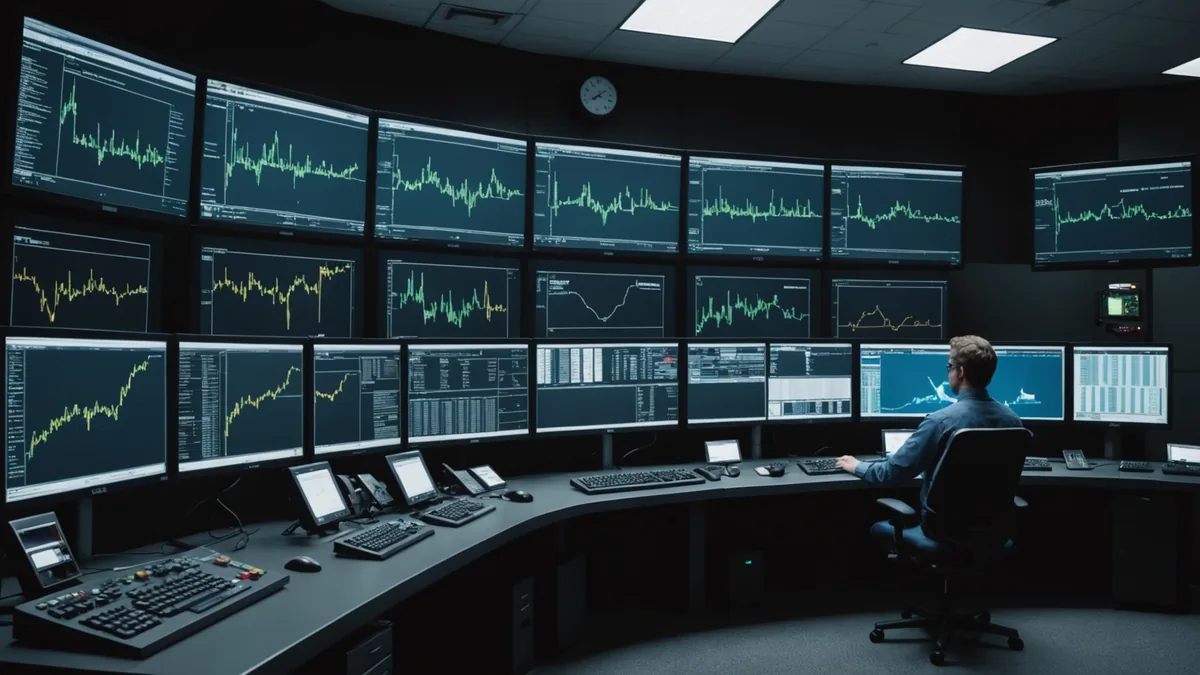
This is categorically different from a dashboard alert that a human must read and act on. Dashboard alerts are Level 4 observations passed to Level 3 humans. Write-back is Level 4 logic writing directly to Level 3 execution objects. The distinction collapses decision latency from minutes-to-hours (human response time) to seconds.
World-class OEE sits at roughly 85%. The average discrete manufacturer runs 60-65%. A significant fraction of that gap is not machine capability — it is decision latency. Operators discover a drift 45 minutes after it started because the alert sat unread. Write-back closes that window.
ISA-95 Level 3-to-4 Boundary: Where the Integration Lives
ISA-95 defines five levels. Level 0-2 is the physical plant and control systems (PLCs, DCS, SCADA). Level 3 is manufacturing operations management — your MES, your quality management system, your maintenance system. Level 4 is business planning: ERP, supply chain, demand forecasting. Historically, integration between 3 and 4 was batch-oriented: nightly job extracts, morning production reports, manual exception handling.
AI write-back lives precisely at this boundary, and that is both the opportunity and the integration challenge. Your MES vendor did not design its API surface for high-frequency machine-to-machine writes. Here is the thing: most MES write-back APIs were designed for human-initiated transactions, not AI agents running at sub-minute cycles. Rate limits, session management, and conflict resolution all behave differently at AI cadence.
Each major MES platform handles this boundary differently. Knowing the specifics matters before you architect anything.
Platform-Specific Write-Back APIs: Siemens, Rockwell, AVEVA
Siemens Opcenter Execution Discrete exposes a REST API under its Opcenter MOM (Manufacturing Operations Management) layer. Write-back targets include work order status updates, process parameter adjustments via the recipe management module, and quality event creation. The critical architecture note: Siemens routes these writes through its MOM service bus, which enforces a configurable transaction queue. In our testing, burst writes above 20 transactions per second require queue depth configuration adjustments — default settings will throttle silently.
Rockwell FactoryTalk ProductionCentre (formerly RSBizWare) uses a WCF/REST hybrid. The ProductionCentre API for work order routing accepts standard REST JSON payloads to the /api/workorders endpoint. Recipe adjustments go through the FactoryTalk RecipeManagement API. One practical friction point: Rockwell requires an explicit lock-acquire step before modifying an in-progress work order, to prevent concurrent write conflicts with the operator console. Your AI agent must handle lock expiry gracefully — a failed lock-acquire should log and retry, not fail silently.
AVEVA MES (formerly Wonderware MES) exposes write-back through its IntelaTrac workflow engine and the ArchestrA Object Model. Write-back of process parameters goes through the ArchestrA Galaxy repository — a PUT to the relevant attribute on the AppEngine object. Worth knowing: AVEVA's write-back propagates through the same historian that feeds your reports, so write-back events appear automatically in your production records without a separate logging step.
What AI Can Trigger via Write-Back and What It Cannot
The use cases that deliver verified ROI in discrete manufacturing:
- Recipe parameter adjustment: AI detects tool wear signature in spindle load data, pushes a compensated feed rate to the CNC recipe parameter in the MES. Cycle time impact: near-zero. Scrap reduction: 15-30% on affected operations in machining lines we have instrumented.
- Work order re-routing: AI identifies a bottleneck forming at Cell B based on queue depth and cycle time variance. Write-back re-routes the next 3 work orders to Cell C. Requires available capacity visibility and a cell equivalency table in the MES — not all manufacturers have this configured.
- Lot hold and release: AI flags incoming raw material lot as statistically out of spec based on correlation with historical scrap events. MES hold applied immediately; QA review queued. This is the highest-ROI write-back pattern we see — a $200K production run does not start on suspect material.
- Maintenance work order creation: AI detects MTBF pattern suggesting imminent bearing failure. Write-back creates a preventive maintenance work order in the CMMS connected through the MES integration layer. Requires MES-CMMS integration, which many sites have but often underutilize.
What AI write-back cannot do, and should not attempt: safety-critical interlock changes (these must stay in PLC logic under IEC 61511), changes that require operator acknowledgment under your site's change management SOPs, and any write to a locked or audited production record. Your integration design must enforce these hard stops.
Data Infrastructure Prerequisites
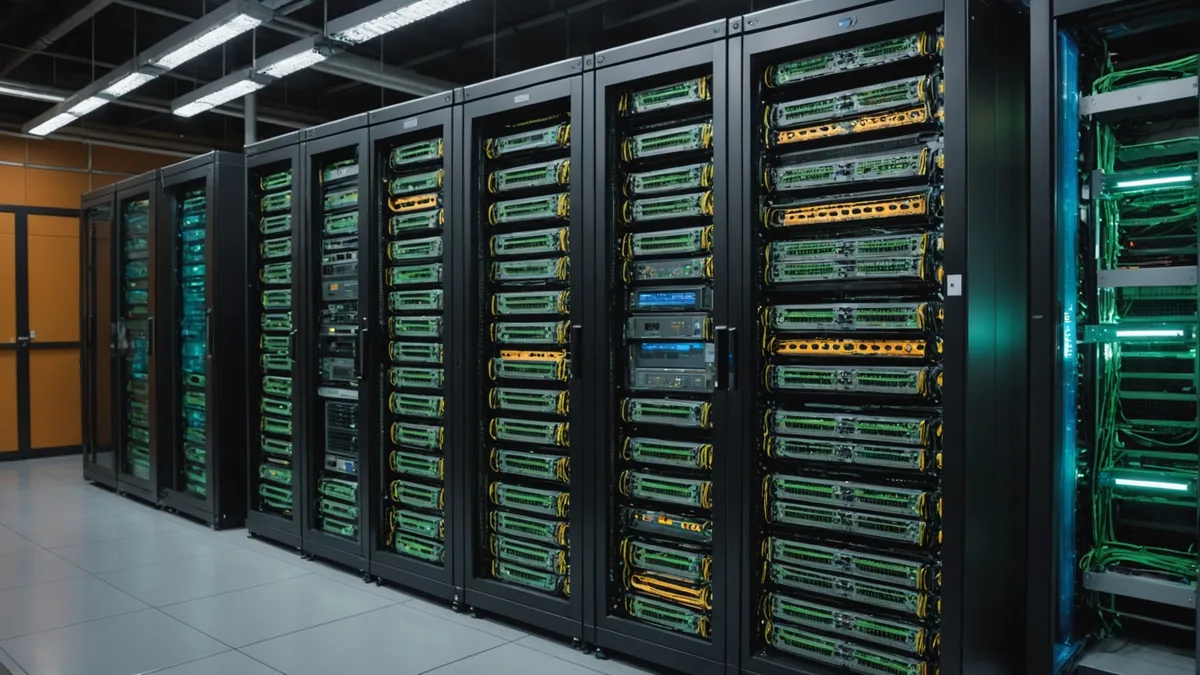
Write-back does not work without reliable write-up. Before you architect a write-back system, audit your Level 2 to Level 3 data fidelity. Fact: most manufacturers underestimate tag noise at the MES layer. OPC UA is the protocol of choice for real-time shop floor data in modern integration stacks — it handles authentication, data typing, and subscription at a level Modbus and EtherNet/IP simply cannot match. If your MES is still reading shop floor data via Modbus TCP polling, your write-back system will be working from stale, unreliable inputs.
Minimum infrastructure checklist: OPC UA server running on each CNC/machine cell, MES configured as OPC UA client with subscriptions (not polling), historian with sub-second resolution for the KPIs driving write-back decisions, and a message broker (MQTT or Kafka) between AI inference and the MES API layer to handle burst and ensure write ordering.
The message broker step is often skipped. Do not skip it. Write ordering matters: if your AI fires two parameter adjustments in rapid succession and the MES processes them out of order, the result is worse than no adjustment. Period.
Governance, Audit Trails, and Change Control
Every write-back transaction must be logged with: timestamp, triggering AI inference ID, the specific parameter changed, the prior value, the new value, and the outcome (accepted/rejected/overridden by operator). This is not optional — ISO 9001 quality management systems require evidence of process changes, and your customers' auditors will ask.
In our experience, manufacturers who instrument write-back audit trails well find that the data becomes a training source for the next generation of the AI model. The loop compounds. Most MES platforms support custom event types — POST an event to your MES event log API on every transaction, success or failure, and you get compliance and intelligence improvement for free.
Operator override authority must be absolute and conspicuous. Any AI-initiated parameter change must be visually flagged on the HMI, and operators must be able to revert with a single action. This is not just good engineering — it is the condition under which your operations team will actually trust the system enough to let it run autonomously.
The Payback Calculation
We run this math with every manufacturer before committing to a write-back architecture. A mid-size automotive Tier 2 supplier with 8 CNC cells, running $180K/hour in fully-loaded production cost, experiencing 3 quality-driven production holds per week averaging 40 minutes each: that is $86,400/week in hold losses, or roughly $4.5M annually. A write-back system that catches 60% of those holds before they escalate to a full line stop returns $2.7M annually. Integration and AI platform cost at this scale: $300,000 to $500,000. Payback: under 3 months.
The math is not always this clean. But it is rarely not compelling. To see how YAMASTRO architects write-back integration for your specific MES platform, explore the YAMASTRO platform or learn more about our implementation approach.