
Why Mid-Market Manufacturers Need an AI Intelligence Layer

There is a gap in manufacturing software that nobody talks about openly. Enterprise MES platforms from Siemens, Rockwell, or SAP are genuinely powerful. They're also sized for $2B+ operations with dedicated IT teams, six-figure implementation budgets, and years of rollout timelines. On the other end, most mid-market plants run on a patchwork of spreadsheets, shift logs in Excel, and tribal knowledge passed between operators. Neither option fits a $50M to $500M manufacturer trying to compete on quality and speed without a hundred-person engineering department.
We've talked to dozens of plant managers in this exact position. The pattern is consistent: data exists, equipment is generating it, and nothing useful is happening with it. Modern CNC machines capture spindle load, feed rate, and thermal signatures continuously. PLCs log cycle times and fault codes. SCADA systems record process variables at millisecond resolution. None of that translates into a decision without someone manually pulling the data, opening a spreadsheet, and building a chart that's already two days old by the time anyone sees it.
Why the ERP-to-Spreadsheet Gap Matters Now
The problem isn't new. Mid-market manufacturers have lived with it for decades. What changed is the competitive pressure. OEM customers now expect supplier quality dashboards with real-time yield data. Automotive tier-1s routinely audit their tier-2 suppliers' process capability documentation. If you cannot produce PPAP-ready SPC charts or trace a quality escape back to a specific machine parameter at a specific time, you are a risk to their supply chain. And risks get replaced.
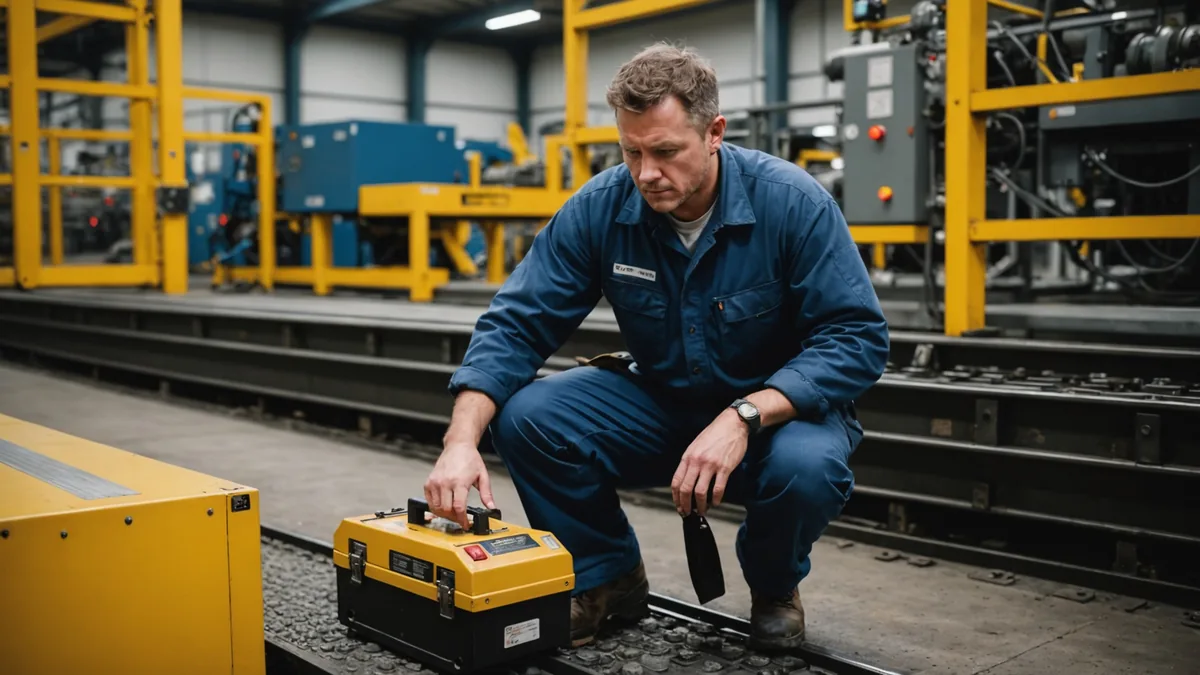
Simultaneously, labor scarcity has raised the stakes on every equipment failure. When a senior machinist retires, the institutional memory of "this press always runs hot on third shift" leaves with them. A plant that relied on experienced operators to interpret machine behavior is suddenly flying blind. Downtime that used to get caught early by a watchful operator now runs to failure.
The enterprise ERP systems don't solve either problem for mid-market plants. SAP S/4HANA implementations routinely run 18 to 36 months and $1M+ in consulting fees before any production data flows. That is not a realistic option for a 200-person precision machining shop with a $3M capital budget. The gap is structural, not just a price issue.
What an AI Intelligence Layer Actually Does
The term gets overused. Let's be precise about what it means in a manufacturing context.
An AI intelligence layer sits between your existing equipment data (PLCs, SCADA, CNC controllers, sensor feeds) and the people who need to act on it. It does three things that spreadsheets and basic SCADA dashboards cannot: it establishes baseline behavior for each asset under each operating condition, it detects deviations from that baseline in real time, and it surfaces those deviations as actionable alerts with enough context to trigger a maintenance work order rather than a phone call to an engineer who then opens a laptop and starts investigating.
The architecture matters here. Real-time visibility means the latency between an anomaly occurring and an alert reaching the right person is measured in seconds, not hours. Anomaly detection at the asset level means the system knows that a particular CNC spindle running at 70% load on a titanium job behaves differently than the same spindle at 70% load on aluminum, and it does not conflate the two. And no rip-and-replace means the intelligence layer reads from existing OPC-UA endpoints, Modbus registers, or database tables without requiring a forklift upgrade to the control system.
The goal is not to replace the MES. The goal is to give mid-market plants the analytical capability that MES users take for granted, without the $2M implementation price tag or the 18-month timeline.
The Mid-Market Operational Reality
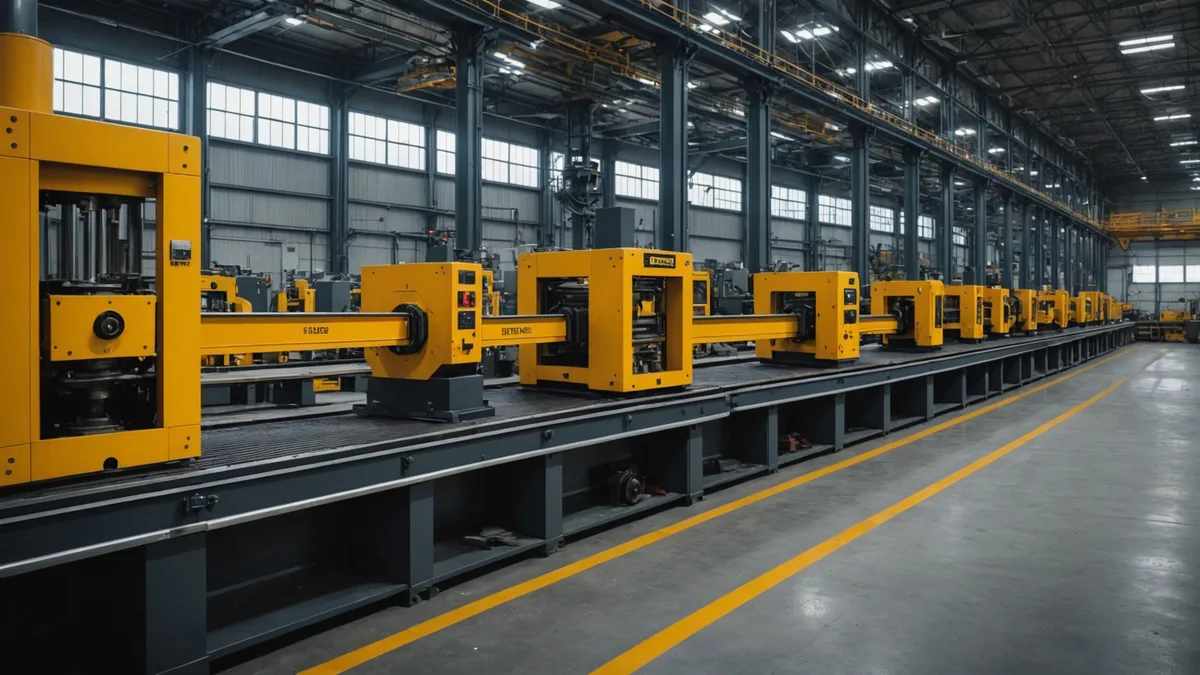
Here's the thing: most mid-market plants have better data infrastructure than they realize. A six-axis CNC machining center from Fanuc or Mazak has an Ethernet port and an MTConnect interface. A Siemens S7 PLC communicates over Profinet. Even legacy equipment from the 1990s often has a serial port that outputs basic status data. The raw material for an intelligence layer is frequently already there.
What's missing is not the data source. It's the translation layer. Raw PLC registers do not tell you anything useful in isolation. A spindle current reading of 14.3 amps is meaningless without the historical baseline showing that the same spindle on the same operation has run at 11.8 to 12.4 amps for the past 340 cycles, and that 14.3 is 18% above the upper control limit. That translation, from raw signal to operational insight, is what the intelligence layer provides.
We've seen plants reduce their average detection-to-diagnosis time from 4 to 6 hours down to under 20 minutes after deploying this kind of architecture. Not because the maintenance team got smarter, but because the information they needed to diagnose a problem was already organized and presented when they opened the alert.
Why Not Just Buy a CMMS?
A CMMS (Computerized Maintenance Management System) is a work order and PM scheduling tool. It is excellent at what it does. It does not do anomaly detection. It does not analyze vibration signatures or process parameter drift. It cannot tell you that a bearing on conveyor 7 is developing an outer race defect based on a 2x harmonic in the FFT spectrum.
A CMMS tells you when to service equipment based on a calendar or a usage counter. An AI intelligence layer tells you when equipment actually needs service based on its current condition. These are complementary tools, not competing ones. Most plants that deploy an intelligence layer keep their CMMS and integrate the two: the intelligence layer generates the condition-based work order trigger, the CMMS manages the execution and parts inventory.
The distinction matters because plant managers sometimes compare these two as alternatives. They are not. Fact: you can have perfect PM compliance in your CMMS and still have a motor fail catastrophically two weeks before its scheduled service interval, because the calendar-based schedule did not account for the bearing defect that developed after three years of shaft misalignment.
Implementation Without Disruption
The no-rip-and-replace constraint is not just a marketing bullet point. It is a hard operational requirement for most mid-market plants. Production cannot stop for a six-month software rollout. The maintenance team cannot dedicate two engineers to an integration project for a quarter. Any system that requires replacing PLCs, upgrading SCADA versions, or rewriting ladder logic is a non-starter.
Practical implementation for a typical 40-machine shop floor looks like this: read-only OPC-UA connections to existing SCADA servers, direct Ethernet connections to CNC controllers via MTConnect adapters, and edge compute nodes that run the anomaly detection models locally without requiring cloud connectivity. Total installation time for a pilot cell of 8 to 12 assets: 3 to 5 business days. No production downtime required. Baseline learning period runs 14 to 21 days while production continues normally, after which alert thresholds are automatically calibrated to actual operating conditions rather than textbook specifications.
The economics for a $150M discrete manufacturer are straightforward. If unplanned downtime costs $75,000 to $100,000 per incident and a plant experiences 15 to 20 incidents per year, the annual exposure is $1.1M to $2M. Preventing 40% of those incidents through early anomaly detection yields $440K to $800K in annual savings. An intelligence layer at mid-market scale typically runs $3,000 to $6,000 per month for 25 to 75 monitored assets. The ROI math takes care of itself.
Where to Start
The mistake most plants make when evaluating this category is trying to instrument everything at once. Start with your highest-cost, highest-criticality assets. The 3 to 5 machines that, if they go down, halt the entire production flow. Not the peripheral equipment. Not the material handling conveyors. The bottleneck assets.
Instrument those first. Build 60 days of baseline data. Validate that the anomaly detection is catching real problems by reviewing the first 10 to 15 alerts with your maintenance team. Then expand. That sequencing turns a strategic initiative into a series of small, provable wins rather than a big-bang deployment that fails to deliver before the CFO asks why the ROI has not materialized.
Mid-market manufacturers are not smaller versions of large enterprises. They have different constraints, different budgets, and different organizational structures. The AI intelligence layer that fits this segment is not a stripped-down enterprise MES. It is a different architecture built for a different reality. Talk to us about what that looks like for your specific equipment mix and production environment.