
Shift Handover Intelligence: What a Supervisor Should Know in 60 Seconds
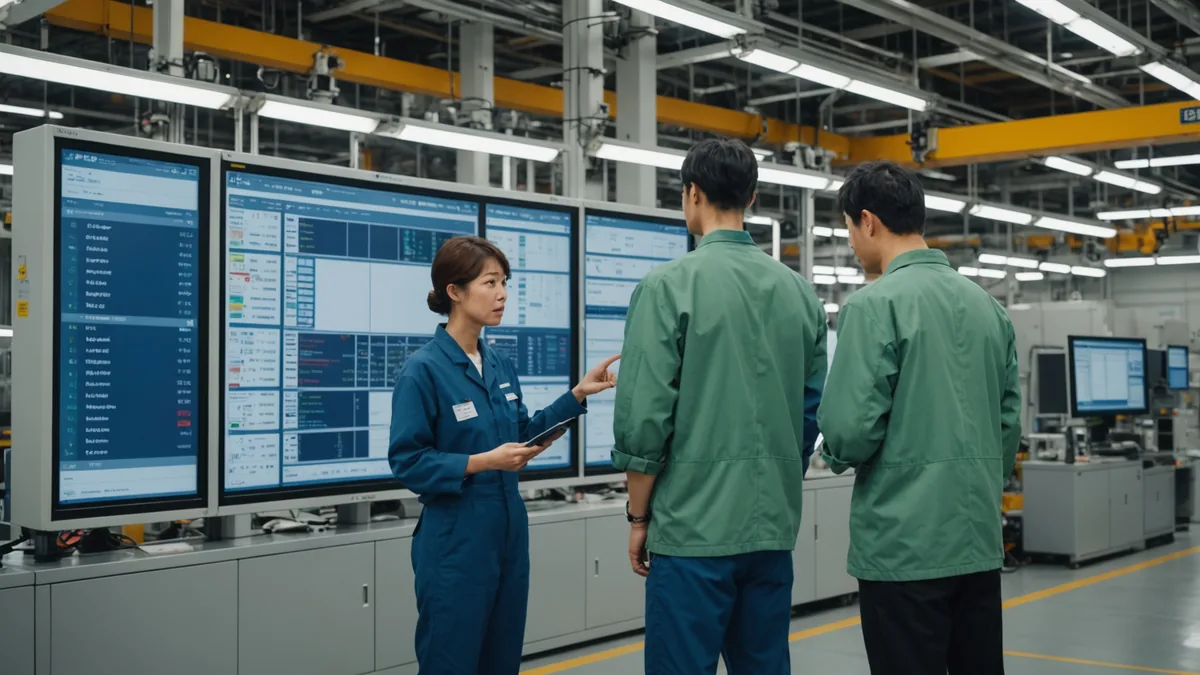
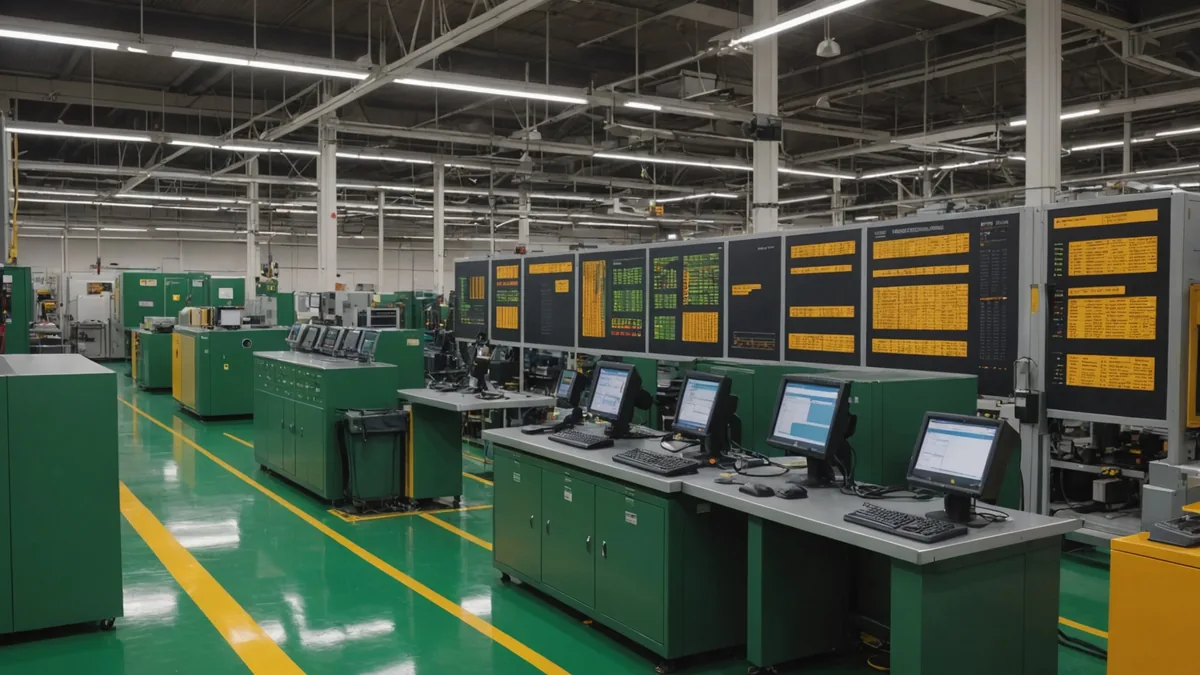
The Toyota Production System established andon as the canonical tool for surfacing problems the moment they occur. Toyota's andon culture — the cord you pull to stop the line, the visual signal that demands immediate response — is a real-time problem escalation system built on the premise that information must not be buffered. And yet, eight hours later, when the day shift hands over to the night shift, most plants buffer everything. The outgoing shift lead writes a paragraph in a logbook. Sometimes two. The incoming lead reads it in 90 seconds and starts their shift already behind on context. Eight hours of production intelligence, compressed to a paragraph. That is not andon culture. That is information loss culture.
The Anatomy of Shift Turnover Information Loss
In our experience auditing shift handover processes at Japanese and Western discrete manufacturers, the information loss follows a predictable pattern. Not random. Structured. Exactly the same way every time.
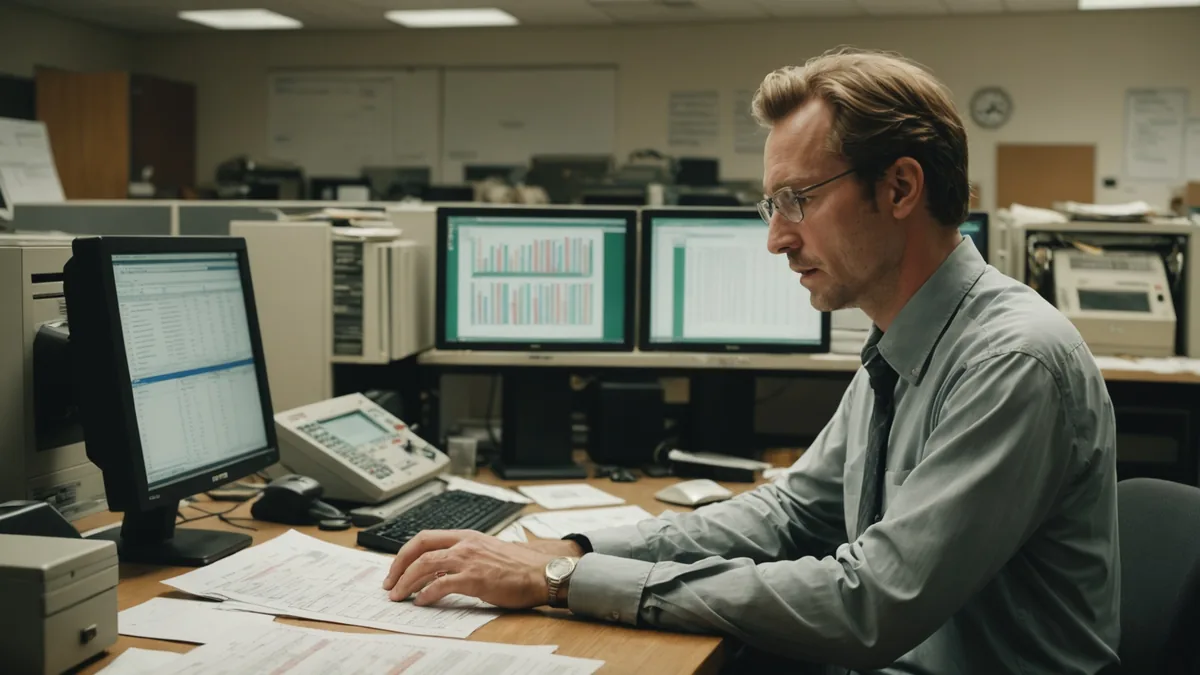
The outgoing shift lead is tired and often running a final task. The handover log gets written in the last 10 minutes of a 8-hour shift. Chronic issues that everyone knows about go unwritten because they are assumed known. Novel events that happened at hour 3 are no longer fresh and get summarized rather than described. Machine states that are borderline — not alarming, but drifting — get omitted because they did not alarm.
The incoming shift lead reads the log and then talks to the outgoing lead. That conversation is the real handover. But it lasts 5 minutes on a good day, 0 minutes when shifts overlap poorly or the outgoing lead has already left. Real talk: the logbook is a compliance artifact, not an intelligence transfer. The actual knowledge walks out the door with the outgoing crew.
What Eight Hours of Shift Data Actually Contains
A typical 8-hour shift on a mid-size discrete manufacturing line generates substantial data. Specific numbers we see across instrumented sites:
| Data Category | Typical Volume per Shift | Handover Log Coverage |
|---|---|---|
| OPC UA tag events above threshold | 800-2,400 events | 2-5 mentioned |
| MES alarm/alert records | 40-200 records | 1-3 mentioned |
| Work order status changes | 15-80 transitions | Major delays only |
| Quality inspection results | 20-150 records | Failures only, sometimes |
| Operator manual log entries | 4-12 entries | All (they authored them) |
The gap is not a discipline problem. The gap is a cognitive bandwidth problem. No shift lead can synthesize 2,000 tag events and 150 quality records into a useful briefing in 10 minutes. Humans are not built for that task. AI is.
AI Shift Summarization: What It Actually Does
AI-generated shift handover intelligence is not a chatbot summary of the MES log. Done correctly, it is a ranked anomaly brief with causal context. Here is what the YAMASTRO shift intelligence module produces from an 8-hour shift window:
- Top-N anomalies by downstream risk: not just what alarmed, but what correlates with yield loss or quality escapes based on historical patterns. A spindle load excursion that precedes tool breakage in 70% of cases is ranked higher than a conveyor speed deviation that has never caused a downstream problem.
- Open-state equipment conditions: machines that ended the shift in a borderline state. Not in alarm. Not in normal. In the range where the data says attention is warranted within the next 2-4 hours.
- Production rhythm summary: actual cycle times vs. standard by cell, queue depths going into the next shift, work orders at risk of missing their due window.
- Quality event thread: any lot or work order that had quality touches this shift, with inspection outcomes and any pending disposition decisions.
- Unresolved operator notes: manual log entries that referenced an action to take or a condition to monitor, extracted and flagged as open items.
Delivery format: a structured 5-minute briefing. Not a dashboard. Not a report that requires navigation. A linear document the incoming lead reads once, top to bottom, in the 5 minutes before they walk the floor.
The Toyota Andon Kaizen Connection
Toyota's andon system is not just a tool. It is an epistemology. Problems surface immediately, get addressed at the source, and feed back into standardized work. The genchi-genbutsu principle — go and see for yourself — is built on the premise that information is most reliable when it is closest to the event. Shift handover is the opposite of genchi-genbutsu. It is second-hand, delayed, and filtered through fatigue.
AI shift intelligence does not replace the walk-the-floor mentality. But it restores something close to real-time situational awareness for the incoming shift lead. In our data, plants using AI shift briefings reduce the time-to-first-corrective-action after a shift change by 35 to 50 minutes. On a line running $80,000/hour in production value, that is $47,000 to $67,000 of production risk mitigated per shift transition. Three shifts a day, five days a week: the math becomes material.
Real Handover Anti-Patterns We See Every Week
These are not hypothetical. We see these at real sites.
The "machine is fine" entry. Outgoing lead writes "Machine 4 running OK" in the log. Machine 4 had a spindle load excursion at hour 5 that resolved itself. The incoming lead does not know to watch Machine 4. At hour 2 of the next shift, Machine 4 breaks a tool. The incoming lead's first corrective action is 40 minutes of cleanup and re-setup that would not have been necessary with 10 minutes of proactive attention at shift start.
The knowledge-holder who is absent. The one person who knew about the rework queue on Line 2 called in sick. No one else wrote it down. The incoming shift discovers 18 units in unauthorized hold at hour 3. Seriously. This happens every week somewhere.
The alarm that cleared itself. An alarm cleared before it was acknowledged. It does not appear in any log. The condition that caused it is still present. The next shift has no record it occurred. Classic SCADA anti-pattern: cleared alarms disappear from the alarm log in many legacy configurations.
Integration Requirements for Shift Intelligence
Effective AI shift summarization requires data integration across at least three layers: SCADA/historian (Wonderware, GE Proficy iFIX, Ignition by Inductive Automation, or Siemens WinCC), MES (Opcenter, FactoryTalk, AVEVA), and operator manual log (typically a custom application or paper form digitized via tablet). The AI layer subscribes to the historian for continuous tag data and queries the MES and operator log at shift boundary to assemble the briefing.
The historian integration is the technically demanding piece. Ignition's tag historian is the most accessible for custom AI integration — its API surface is well-documented and the module architecture allows direct subscription from external systems via MQTT or OPC UA. GE Proficy requires the Plant Applications module for structured query access. Wonderware's Historian client is accessible via its SDK but demands careful attention to compression settings — default compression on some configurations can suppress the sub-threshold excursions that AI shift analysis depends on.
From Information Loss to Knowledge Transfer
Hoshin-kanri — Toyota's policy deployment methodology — works because strategic intent is translated into measurable action at every level of the organization. Shift handover intelligence is hoshin-kanri for the shop floor. Strategic attention goes where the data says it matters, every shift, without relying on the outgoing lead to have remembered everything or the incoming lead to have asked the right questions.
The 5-minute AI briefing does not replace human judgment. The incoming lead still decides what to do. But they decide with full situational awareness instead of a paragraph in a logbook. That difference is where the value lives. To see how YAMASTRO implements shift intelligence for your line configuration, explore the YAMASTRO platform or read about our approach to manufacturing AI.