
The Real Cost of Unplanned Downtime in Discrete Manufacturing
The $260,000-per-hour figure for automotive assembly downtime gets cited often enough that it has become almost numb. Numbers that large stop feeling real. But even outside automotive, the discrete manufacturing average runs $50,000 to $100,000 per unplanned downtime hour when you account for all cost categories honestly, and most plants do not account for them honestly.
The standard calculation looks at lost production output and stops there. A press line goes down for four hours, you lost four hours of throughput, multiply by your margin per unit, call it $80,000, write it in the incident report, move on. That math misses roughly 40 to 60 percent of the actual cost of that event. In our experience working with mid-market manufacturers across discrete and process industries, the hidden cost categories are consistently underestimated, and that underestimation is why maintenance investment decisions get made with the wrong denominator.
The Numbers Behind the Number
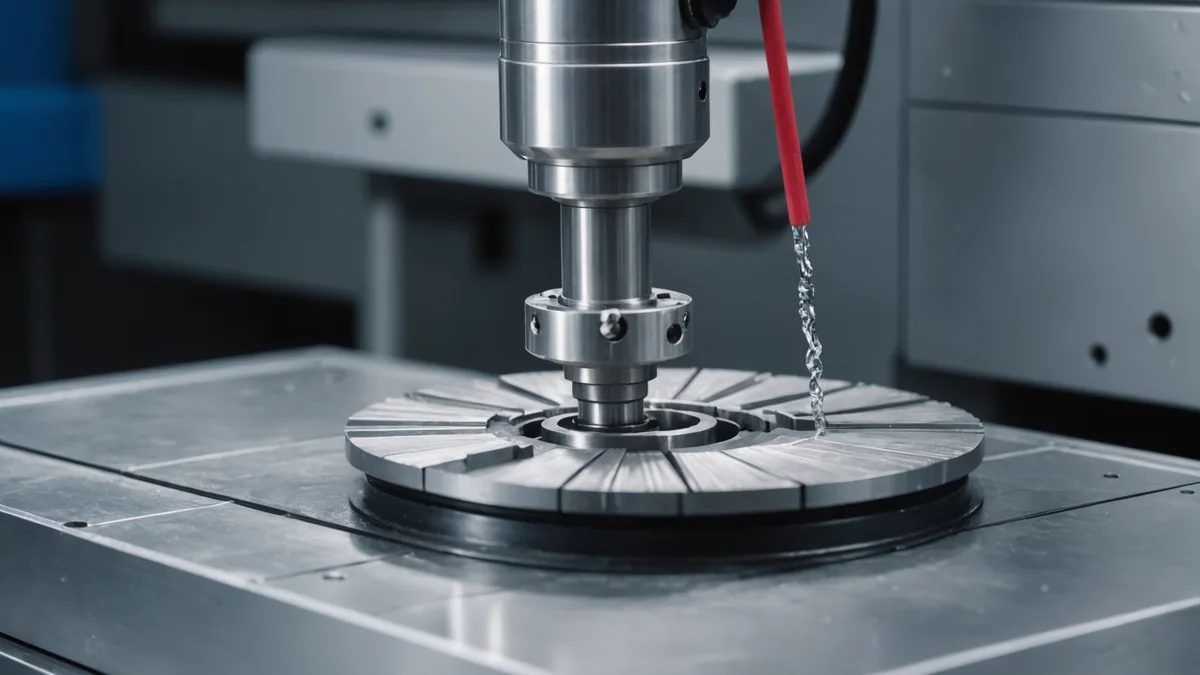
Let's work through a realistic incident. A CNC machining cell on a critical production line goes down unexpectedly at 6 AM on a Tuesday. Scheduled shift capacity for that cell: 120 parts. Customer delivery commitment: 500 units by end of week.
The obvious cost is the lost production: 120 parts at a $400 contribution margin each is $48,000 in the first shift alone. But here is what else happens in the next 72 hours that does not appear in the initial incident report.
| Cost Category | Typical Impact |
|---|---|
| Lost production (direct) | $48,000 (4-shift backlog at 120 parts/shift) |
| Emergency parts expediting | $4,500 (2-day air freight on a $1,200 spindle bearing) |
| Overtime labor to recover schedule | $11,200 (14 operators x 8 hours x $100/hr blended rate) |
| Rescheduling and planning labor | $3,600 (production scheduler, planner, ops manager x 12 hours) |
| Quality escapes from rush production | $8,000 to $22,000 (rework, scrap, potential customer return) |
| Customer penalty or premium freight | $6,000 to $15,000 (late delivery surcharge or expedited outbound) |
Total: $81,300 to $104,300 for a single four-shift downtime event. The initial incident report showed $48,000. The actual damage is 70 to 117 percent higher than what appears on the maintenance department's scorecard.
Quality Escapes Are the Sleeper Cost
This one deserves its own section because it is the most underestimated and the most dangerous.
When production is behind schedule and the pressure is on to recover, quality controls get compressed. Inspection intervals that normally run every 25 parts get stretched to every 50. First-article inspection on the reconfigured setup gets abbreviated. An operator who has been on 12-hour days for three days makes a judgment call that would not happen under normal conditions.
Quality escapes that originate from recovery operations after an unplanned downtime event can cost 5 to 25 times the original downtime cost once you include customer returns, warranty claims, and the containment activity required when a defect reaches the field. One automotive supplier we are familiar with traced a $2.3M warranty charge back to a production run that occurred in the 48 hours after a major equipment failure. The connection was clear in the data, but nobody made it at the time because the focus was on schedule recovery, not quality correlation.
Honest cost accounting adds a risk-weighted quality escape cost to every unplanned downtime event. Even a conservative 5% probability of a significant quality escape, priced at $200,000, adds $10,000 to the expected cost of every incident.
Expediting: Where Money Disappears Quietly
Emergency parts procurement is a systematic profit leak that almost never appears on anyone's radar until a finance team does a detailed spend analysis. Standard bearing replacement in a planned maintenance window: a $1,200 part with a $300 labor cost, scheduled during a weekend shutdown. The same bearing, needed within 24 hours after an unexpected failure: $1,200 in parts, $4,500 in expedited freight (2-day international air on industrial components), and 4 hours of unproductive labor waiting for the part to arrive.
Expedited freight costs on industrial components routinely run 3 to 8 times the component cost itself. For plants with multiple failures per month, the annual expediting spend can exceed $150,000 to $300,000 for a mid-size facility. That is almost entirely avoidable with adequate predictive warning time.
The Predictive Maintenance ROI Recalculation
Here is why accurate downtime cost accounting matters for the predictive maintenance investment decision: if you are using the initial incident report number ($48,000 in our example), you are undervaluing prevention by 70 to 117 percent. That distorts every ROI calculation you run.
The correct input to a PdM ROI model is the fully-loaded incident cost, including expediting, overtime, quality risk, and customer impact. When you use the real number, the investment threshold for predictive maintenance technology shifts dramatically.
Fact: a mid-market plant with 18 unplanned downtime incidents per year, each costing $90,000 fully-loaded, has a $1.62M annual exposure. A predictive maintenance system that prevents 35% of those incidents saves $567,000 per year. At a $60,000 annual technology cost for monitoring 50 assets, the payback is under 40 days.
If you are running that same calculation using the $48,000 direct cost figure from incident reports, you get a payback of 64 days. Still good, but the investment decision becomes less urgent. The plant that waits another year to deploy predictive maintenance because the ROI did not clear the internal hurdle rate by enough has left $567,000 on the table. Twelve months in a row. Because the denominator was wrong.
The Overtime Death Spiral
Chronic unplanned downtime creates a labor dynamic that compounds the cost problem. When equipment failures repeatedly push production behind schedule, the default response is overtime. Overtime keeps the plant running, but it also erodes workforce reliability over time.
Operators on sustained overtime schedules make more errors. Throughput per hour drops. The additional production capacity from overtime is real, but it is 30 to 50 percent less efficient than straight-time production in most shop floor environments. The $100/hour operator in overtime is delivering the output of a $67/hour operator while being paid the $100/hour rate.
Plants that track this find a consistent pattern: high unplanned downtime rates correlate with high overtime rates, which correlate with elevated quality defect rates during overtime production, which correlate with customer complaints and rework costs. The entire chain traces back to the original equipment failure that nobody prevented.
Measuring What Matters
The first step is measuring downtime cost accurately. Pull the last 12 months of incident reports. For each incident, calculate the direct production loss, then separately estimate the expediting cost, the overtime recovery cost, and any quality events that occurred within 72 hours of the incident. Sum all four categories.
In every analysis we have run, the total is 1.4 to 2.1 times the direct production loss figure. If your plant's incident reports show $800,000 in annual downtime cost, the real number is almost certainly $1.1M to $1.7M.
That is your prevention budget. A third of it pays for a world-class predictive maintenance infrastructure. The other two-thirds is profit that stays in the plant instead of evaporating through a combination of expedited air freight, weekend overtime, and quality escapes that never get properly attributed to their root cause. Request a demo to see how YAMASTRO tracks and prevents these costs at the asset level.