
Yield Loss Correlation: Connecting Defects Back to Root Equipment State
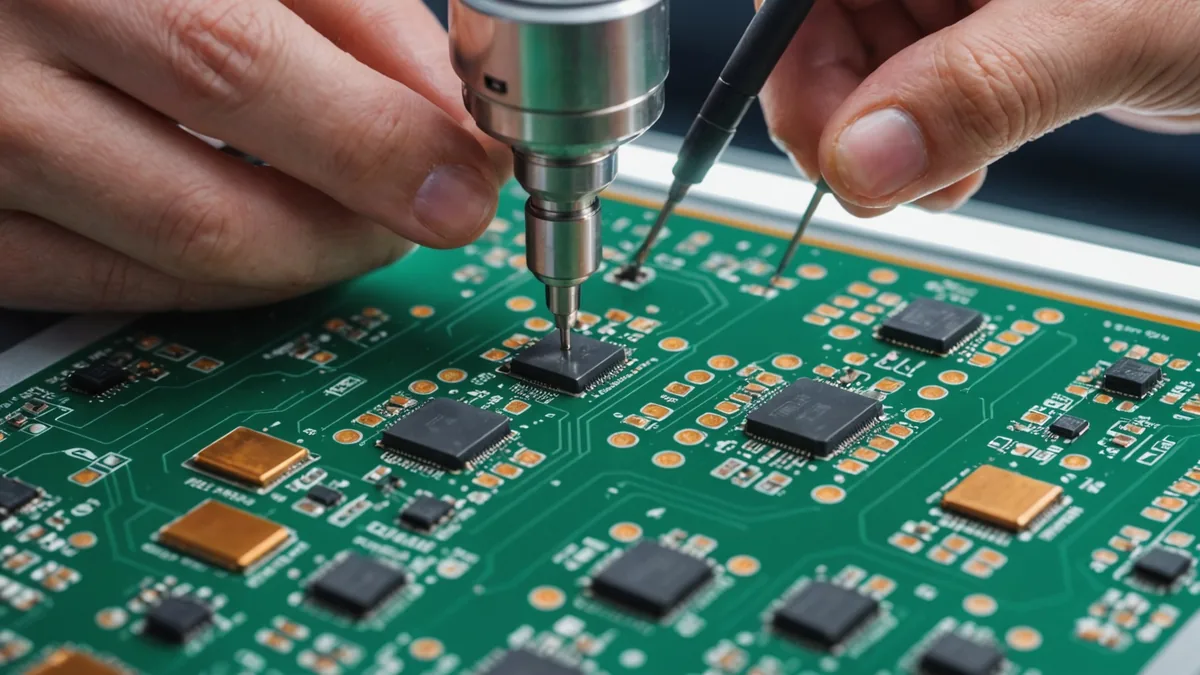
A PCB assembly line at a consumer electronics contract manufacturer in Nagano was running 3.2% solder bridging defects on a specific PCBA variant. Not catastrophic. Below the threshold that would trigger a formal CAPA. But persistent — the defect rate had been stable at 3.2% for 11 weeks. Process engineers had checked the obvious suspects: stencil condition, paste age, reflow profile. Nothing. The defect continued at exactly the rate it always had. The root cause turned out to be the combination of a specific solder paste lot, humidity above 62% in the press-fit zone, and ambient temperature below 19 degrees Celsius in that corner of the building. No single factor was sufficient. All three together were deterministic. Multi-variable correlation found it in 4 hours. Eleven weeks of human investigation had not.
Yield Loss, Scrap, and Rework: They Are Not the Same Problem
In our experience, manufacturing teams conflate these three categories constantly, and that conflation makes root cause analysis harder. Precise definitions matter before you can build a correlation model that is actually useful.
| Category | Definition | Cost Profile | Correlation Approach |
|---|---|---|---|
| Yield loss | Units that complete the process but fail final inspection | Full processing cost + inspection cost, zero revenue | Correlate with process variables at every upstream operation |
| Scrap | Units removed from production mid-process due to irreversible defect | Partial processing cost + material cost, zero revenue | Correlate with variables at the operation where scrap was detected and the 2-3 preceding operations |
| Rework | Units that fail inspection but can be corrected and re-submitted | Full processing cost + rework cost (typically 1.5-3x original operation cost) | Correlate with variables at the failing operation; rework rate is often a leading indicator for eventual scrap |
These distinctions matter for correlation modeling because the causal chain is different. A yield loss that triggers at final inspection may have its root cause 6-8 operations upstream. Scrap is more local. Rework is often a precursor signal. Mixing them in a single correlation model produces noise that masks the actual signal.
The DMAIC Frame for Yield Correlation Analysis
Six Sigma's DMAIC (Define, Measure, Analyze, Improve, Control) is the right frame for yield correlation work, not because it is elegant, but because it enforces the discipline of defining the defect precisely before measuring anything. We have seen correlation projects fail because the team started pulling data before they had agreed on a defect definition. Then the model correlates with nothing useful and the engineers conclude that AI does not work for their process.
The Define phase for yield correlation requires three decisions: the defect code (specific, from your MES quality module, not a catch-all like "appearance defect"), the unit of analysis (per lot, per work order, per shift, per machine), and the time window for correlation (how far upstream in time and process steps to search). Get these wrong and the analysis is wrong regardless of how sophisticated the correlation algorithm is.
The Measure phase is where data infrastructure quality becomes decisive. Your Cpk targets tell you how capable your process is supposed to be. Cpk below 1.33 means the process is not reliably centered within spec — at Cpk = 1.0, approximately 2,700 defects per million opportunities. At Cpk = 1.67 (world-class for high-precision machining), that drops to 0.6 DPMO. Correlating yield loss against a process running Cpk of 0.8 requires a different strategy than correlating against Cpk of 1.5 — the former has so much inherent variation that identifying the specific contributing variables is genuinely harder.
Multi-Variable Correlation: The Technical Architecture
Single-variable correlation is trivial and usually insufficient. "Does higher spindle temperature correlate with more scrap?" The answer is almost always "yes, weakly, along with everything else." The interesting question is: under what specific combination of conditions does spindle temperature become deterministic for scrap?
This requires conditional multi-variable analysis. The approach YAMASTRO uses is a staged correlation pipeline:
- Feature selection: from the available tag universe (a typical machining cell has 40-200 OPC UA tags), identify the 10-20 tags with the highest individual correlation to the target defect. This reduces the combinatorial search space to manageable size.
- Interaction term generation: create pairwise and three-way interaction features from the top-ranked individual tags. This is where multi-variable effects are captured.
- Threshold discovery: for each candidate variable, find the threshold value above or below which the defect rate changes discontinuously. Not a linear slope — a step function. Real manufacturing processes have threshold behaviors, not smooth curves.
- Combination testing: test which combinations of threshold conditions are jointly necessary and sufficient for the defect rate to exceed the target. This produces a rule that is interpretable by a process engineer, not just a model coefficient.
The PCB example at the opening of this article went through exactly this pipeline. The combination rule — lot type AND humidity AND temperature — is interpretable. A process engineer can act on it. A neural network coefficient is not interpretable. Interpretability is not a nice-to-have for manufacturing AI. It is a requirement.
Semiconductor and PCB-Assembly Context
These industries present yield correlation challenges that are structurally different from mechanical assembly. Both are worth examining specifically because they are where multi-variable correlation has the most documented ROI.
In semiconductor (specifically wafer fab, which several of our customers in the Shinagawa and Kawasaki fab corridors operate), yield correlates with chamber conditions (temperature uniformity within 0.5 degrees Celsius matters at advanced nodes), incoming wafer lot characteristics (resistivity range, bow/warp measurements), and photolithography parameters (focus offset, dose uniformity). The correlation time window spans hours to days because wafer processing is a multi-day multi-step process. A yield loss detected at final electrical test may have its root cause in a deposition step from 36 hours earlier. Data retention and traceability per lot is mandatory — fortunately, semiconductor fabs are typically the best-instrumented manufacturing environments in discrete industry.
PCB assembly yield is dominated by solder joint quality. The variables that matter: solder paste viscosity and age, stencil condition and aperture dimensions, component placement accuracy (measurable via AOI coordinate data), reflow profile (specifically the time-above-liquidus metric), and ambient humidity. In our data, ambient humidity above 65% in the paste printing area increases solder bridging defects by 1.8 to 2.4 times on fine-pitch components. Fact: this is one of the most consistently replicated multi-variable relationships we have found across industries, and one of the most consistently ignored because environmental control is an infrastructure cost, not a process cost.
Ppk vs Cpk: The Distinction That Changes Your Correlation Strategy
Both metrics are standard ISO 22400 KPIs for process capability, and the distinction matters for how you interpret correlation results. Cpk measures process capability relative to spec limits under controlled, stationary conditions. Ppk measures actual process performance including all sources of variation — including between-lot, between-shift, and between-operator variation that Cpk studies deliberately exclude.
A process with Cpk = 1.6 and Ppk = 0.9 is telling you something important: it is capable in the short term but has substantial long-term variation sources that capability studies do not capture. This is exactly the situation where multi-variable correlation adds the most value — those long-term variation sources are the signals to correlate against. Raw material lot variation, ambient conditions changing by season, tooling wear accumulated over weeks rather than hours.
Processes with both Cpk and Ppk above 1.33 rarely benefit from yield correlation analysis because their defect rates are so low that the statistical signal is weak. Honestly, if your Ppk is above 1.5, the yield problem is probably not your biggest manufacturing challenge anyway.
From Correlation to Control: Closing the Loop
Correlation analysis that produces a report is 30% of the value. Correlation analysis that feeds a control action is 100% of the value. The identified causal combination — the specific variable thresholds that predict yield loss — becomes the input to a monitoring rule. When those conditions are detected in real-time, the system triggers an alert or, where MES write-back is implemented, a direct process adjustment.
For the PCB example: once the humidity-temperature-lot combination was identified, the plant added a humidity sensor to the press-fit zone (a $400 investment), configured a threshold alert in their Ignition SCADA historian, and added a lot-type check to the work order routing logic in their MES. Solder bridging defects on that PCBA variant dropped from 3.2% to 0.4% within 3 weeks. That is an 87% defect reduction. The total engineering time spent: 4 hours of AI correlation analysis plus 6 hours of implementation. Eleven weeks of prior investigation produced nothing.
To understand how YAMASTRO applies multi-variable yield correlation to your specific process and MES environment, explore the YAMASTRO platform or learn more about our manufacturing AI methodology.