
Five Signs Your Plant Is Ready for Predictive Maintenance
Predictive maintenance is one of those topics that generates a lot of enthusiasm at the conference level and a lot of skepticism at the plant level. We get that. The pitch sounds obvious in a slide deck and messier in a facility where the maintenance team is already stretched, the CMMS data is incomplete, and the last three improvement initiatives never made it past the pilot.
So instead of making the general case for predictive maintenance, here are five specific operational patterns we've seen at facilities that have crossed the line where reactive maintenance is actively costing them more than the transition to condition-based monitoring would. If your plant matches three or more of these, the math is almost certainly in favor of making the move.
Sign 1: Maintenance Feels Like Firefighting
This one isn't subtle. If the maintenance team's week is dominated by emergency callouts, parts that weren't stocked because no one saw the failure coming, and post-breakdown RCA meetings that start with "we didn't know this was failing," that's not a maintenance problem. That's a visibility problem.
Reactive maintenance isn't just expensive in direct cost terms. It creates a culture where the maintenance team is always behind, planning becomes impossible, and improvement initiatives get deprioritized because there's always a fire. In our experience, facilities where more than 40% of maintenance hours are unplanned are in a cycle that gets harder to break without a structural change in how equipment condition is monitored.
The classic sign: the maintenance manager knows, almost instinctively, which machines are going to fail next. They've been watching them long enough to feel it. That's valuable experience. It's also proof that the signals are there. The question is whether you're capturing them systematically or relying on one person's pattern recognition.
Sign 2: Spare Parts Costs Are Climbing
Spare parts budgets are one of the clearest financial signals that reactive maintenance is becoming expensive. When failures are unplanned, the parts bill compounds in two ways: premium freight on emergency orders, and over-stocking of parts "just in case" because lead times are unpredictable when you can't plan replacements in advance.
A plant running primarily reactive maintenance typically carries 20 to 35% higher spare parts inventory than a comparable facility with condition-based maintenance, simply because uncertainty drives buffer stocking. That's capital tied up in inventory that could be avoided with better failure prediction.
If your maintenance parts spend has grown more than 15% year-over-year without a corresponding increase in equipment count, that's a flag. The increase isn't coming from inflation alone. It's coming from the cost structure of unplanned failures.
Sign 3: PM Intervals Feel Arbitrary
Calendar-based preventive maintenance was a meaningful improvement over purely reactive repair. But it has a fundamental problem: it assumes all equipment degrades at the same rate, under the same conditions, on the same schedule. It doesn't.
The clearest sign that PM intervals are no longer grounded in evidence is when technicians ask why a specific interval was chosen and no one has a data-driven answer. "We've always done it every 90 days" is not a maintenance strategy. It's a habit.
Fact: in facilities that have moved from fixed-interval PM to condition-triggered maintenance, average PM labor hours drop by 25 to 40% because technicians are only performing maintenance when equipment condition actually warrants it. At the same time, unplanned failures on monitored equipment drop substantially because the condition signals that precede a failure are being captured before the failure occurs.
Honestly, arbitrary PM intervals often cause problems they're meant to prevent. Replacing bearings on a 60-day cycle means some bearings get replaced when they have 80% of useful life remaining, while equipment in a higher-load position on the same cycle may fail between interventions. Condition data fixes this.
Sign 4: Operators Can Hear Problems Before the CMMS Can
This is our favorite sign. Not because it's a bad thing, but because it's the clearest possible evidence that the condition signals exist and your organization just isn't capturing them systematically.
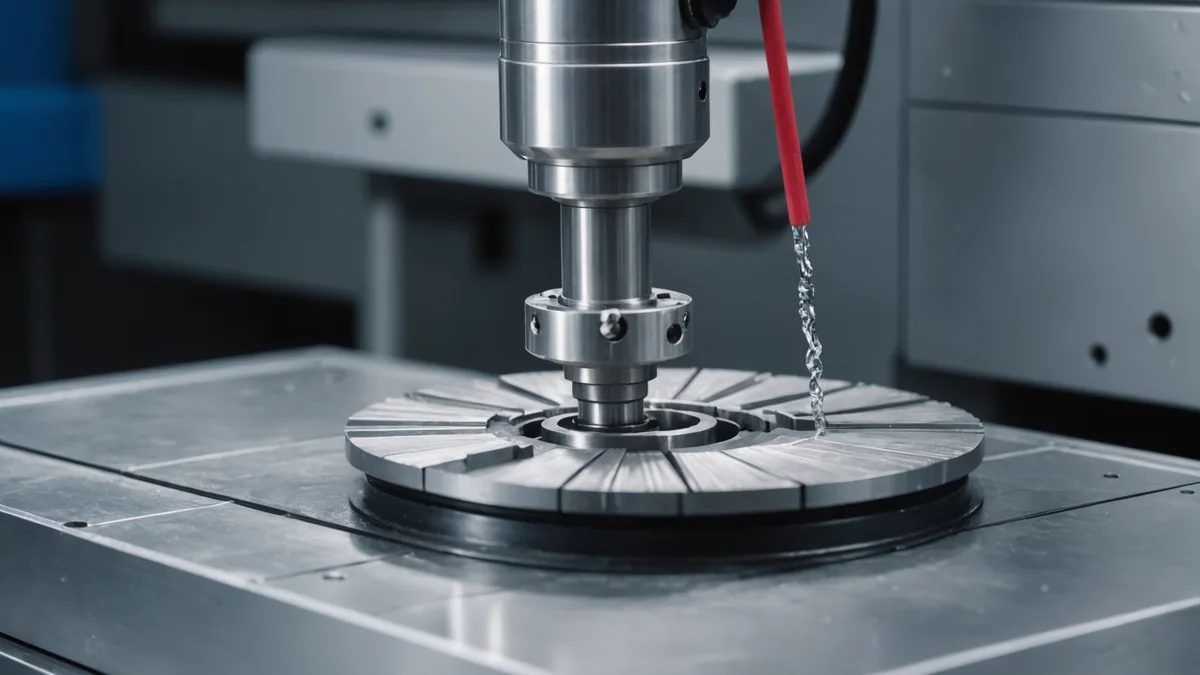
Every experienced operator knows the difference between how a machine sounds when it's healthy and how it sounds when something is developing. Pitch changes in a spindle. Vibration patterns that shift. Coolant flow that looks slightly different. These are real signals. They're just analog, human-sensed, and almost never recorded in a form that can be trended or analyzed.
When operators are routinely flagging equipment concerns to the maintenance team before a fault code fires, that facility is doing informal condition monitoring. The gap is instrumenting it. Adding accelerometers, current signature analysis, or thermal monitoring to those specific machines turns operator intuition into a data stream that can be monitored continuously, trended over time, and used to generate alerts before the failure event rather than after.
We've seen this pattern at facilities where a single senior operator essentially held the plant together through experience alone. Transitioning that knowledge into sensor coverage is both a resilience improvement and a succession planning move.
Sign 5: The Maintenance Backlog Exceeds 20% of Scheduled Work
Maintenance backlog is one of the more actionable leading indicators. A healthy maintenance program runs a backlog of around 2 to 4 weeks of planned work. That's buffer for sequencing and parts procurement. It's not a sign of dysfunction.
When the backlog reaches 20% or more of total scheduled maintenance hours and isn't clearing, that's a different situation. It means the team is spending so much capacity on reactive work that planned maintenance is perpetually deferred. The deferred maintenance creates more failure risk, which creates more reactive work. Classic reinforcing loop.
Here's the thing. Predictive maintenance doesn't eliminate maintenance work. It reorganizes when and why the work happens. A well-instrumented facility sees fewer emergency callouts, which frees the maintenance team to execute planned work, which reduces the backlog, which makes capacity available for additional planned improvements. The cycle works in both directions.
In our data across plants that have moved from reactive-dominant to condition-based programs, average maintenance backlog reduction in the 12 months after implementation runs at 30 to 50%. The first 90 days often look worse before they look better because the monitoring system starts surfacing deferred issues that were already developing. Expect that. It means the system is working.
What to Do If You're Seeing These Signs
The transition to predictive maintenance doesn't require replacing your CMMS or your MES. It requires adding condition data to the equipment that matters most, building the alerting logic around failure patterns specific to your process, and giving the maintenance team a tool that helps them prioritize what to address and when.
YAMASTRO's platform connects to your existing sensor infrastructure, adds monitoring where gaps exist, and presents condition-based maintenance alerts through the same workflow your team already uses. We don't replace your maintenance program. We give it the data layer it's missing.
If two or more of these signs match your current situation, reach out to our team. We'll start with a 30-minute diagnostic conversation about your equipment and your current maintenance cost structure before proposing anything.