
From Calendar-Based to Condition-Based Maintenance
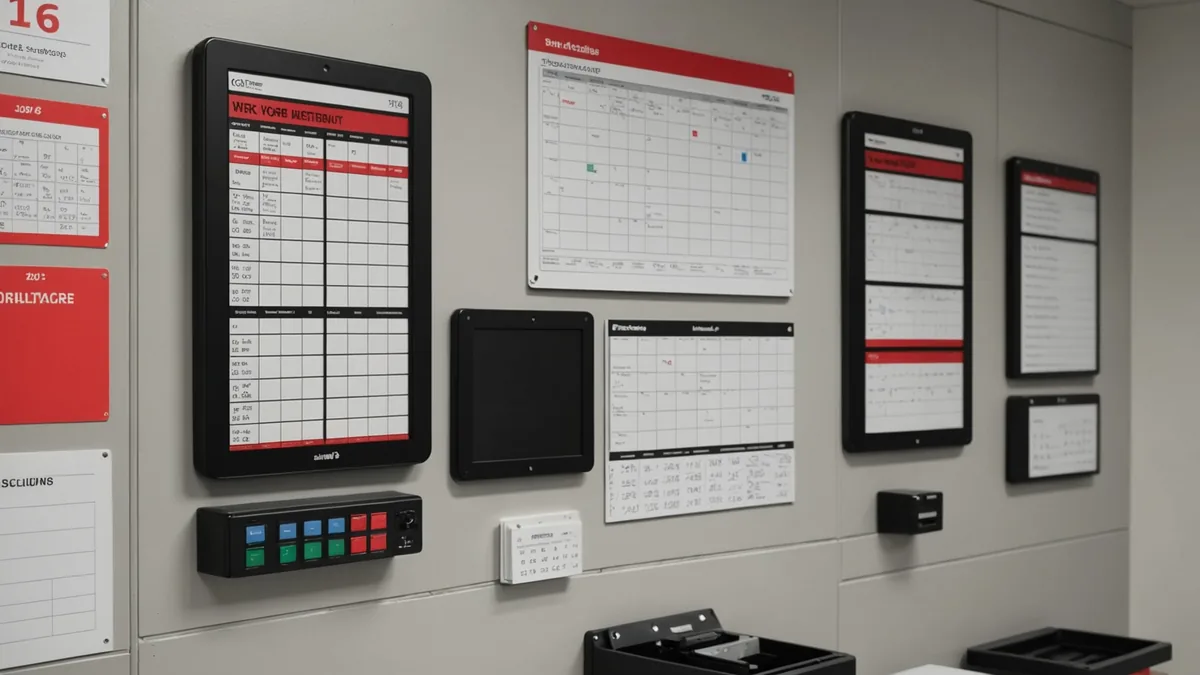
Calendar-based PM schedules have a design flaw that nobody talks about at maintenance conferences: they guarantee you will over-maintain some assets and under-maintain others, simultaneously, across the same facility, every single cycle. The schedule is optimized for neither. It is a compromise that protects no one except the maintenance scheduler who can point to a calendar entry when something goes wrong.
We have seen this play out in plant after plant. A conveyor gearbox gets lubed every 90 days per the OEM manual. The manual was written for a generic load profile. In this particular plant, that gearbox runs at 80% of rated capacity 14 hours a day, seven days a week. It needs service every 55 days. The calendar schedule misses that. Meanwhile, the same plant has a pump motor on a light-duty recirculation loop that gets serviced every 90 days because it is in the same PM batch, despite running at 30% load and showing no signs of degradation after 180 days. Both assets are on the same schedule. One is being serviced too rarely, one too often. That is the inherent failure mode of calendar-based maintenance.
Why the OEM Manual Does Not Protect You
Equipment manufacturers write maintenance schedules based on worst-case operating assumptions and liability considerations. The 90-day interval assumes your motor is running at rated load in a dirty environment with marginal lubrication. If yours is running at 50% load in a climate-controlled cell with good lubricant quality, you are spending money on service that the equipment does not need. Conversely, if you have an asset running above its rated duty cycle due to production pressure, the OEM schedule does not know that. It cannot.
The fundamental problem is that the OEM schedule is a static input applied to a dynamic system. Assets age differently. Loads vary. Alignment changes over time. Lubricant quality degrades at different rates depending on contamination exposure and operating temperature. None of that variation is captured in a calendar entry.
Honestly, the most expensive failures in most plants are the ones that happen between scheduled service intervals, not the ones that the PM schedule was designed to prevent. A bearing that fails 40 days after a lubrication event failed because of mechanical load, vibration-induced fatigue, or contamination. Not because it did not get lubricated.
What Condition Actually Means in Practice
Condition-based maintenance means servicing an asset when its actual physical state indicates service is needed, not because a date has passed. But "condition" is an abstraction. What does it actually look like for the three asset classes that matter most in discrete manufacturing: CNC machine tools, press and stamping equipment, and conveyor drives?
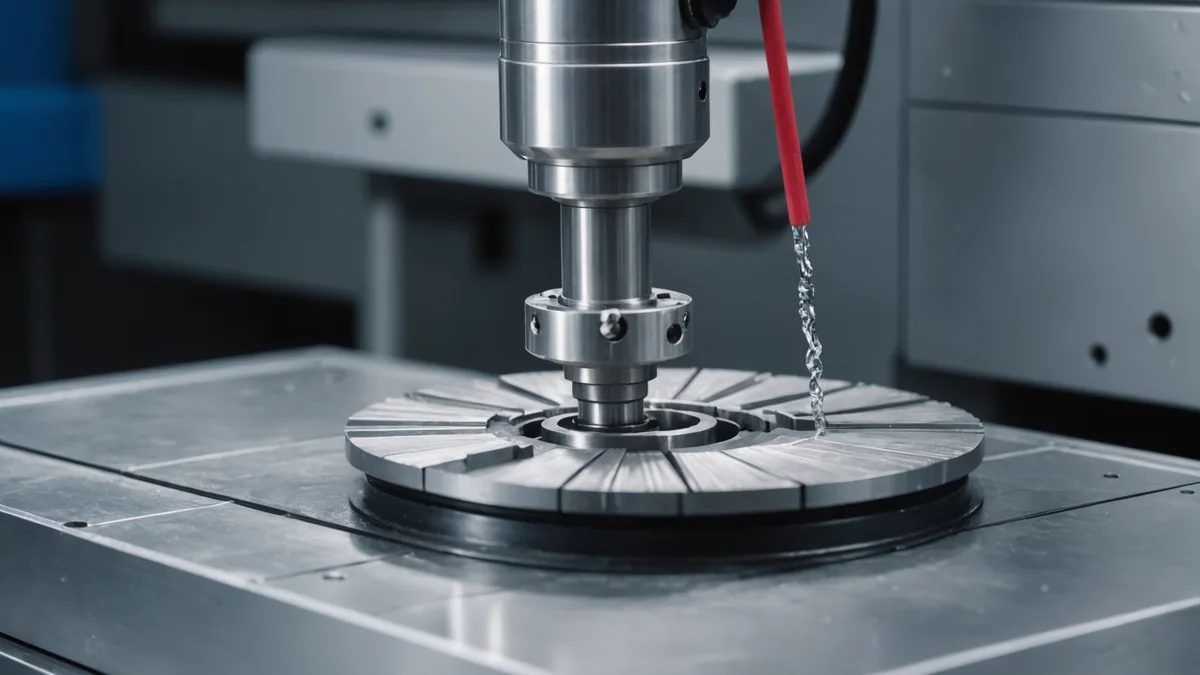
CNC machine tools (spindles, axes, ballscrews): Spindle bearing condition is read through vibration signatures. A healthy spindle at 12,000 RPM produces a characteristic frequency spectrum. As bearing wear develops, specific harmonic frequencies appear in the FFT output at multiples of the ball pass frequency. Outer race defects produce a distinct signature at BPFO. Inner race defects appear at BPFI. These frequencies appear in the data 2 to 8 weeks before the bearing reaches a failure state that affects part quality. That is your service window. Thermal monitoring supplements vibration: a spindle running 8 to 12 degrees Celsius above its normal operating temperature is telling you something, even if the vibration signature has not yet crossed a threshold.
Press and stamping equipment (main drive, clutch-brake, tonnage curves): Press condition monitoring focuses on motor current signature analysis (MCSA) for drive train health, and die protection sensor correlation for tooling condition. A press in good mechanical condition produces consistent tonnage curves with tight shot-to-shot repeatability. As mechanical clearances develop in the drive train, the tonnage curve shape changes: you see earlier onset of load, or asymmetric loading between left and right side of the ram. These are detectable weeks before they cause part rejections or tooling damage. Current harmonics in the drive motor tell a parallel story about mechanical friction and bearing condition.
Conveyor drives (motors, gearboxes, belts, chain drives): Conveyor drives are the most accessible place to start condition monitoring because they are typically loaded consistently and their failure modes are well-understood. Gearbox health reads through vibration at gear mesh frequency (GMF) and its harmonics. A healthy gearbox in a 3:1 ratio with a 1,450 RPM input produces a 4,350 Hz GMF. Wear or damage produces sidebands around that frequency. Belt tension reads through vibration frequency of the belt span; a loose belt has a lower natural frequency than a tensioned one and shows measurable amplitude modulation. Motor current on a conveyor is also an excellent proxy for mechanical drag: an increase of 8 to 12% in steady-state running current with no load change usually indicates bearing or gearbox deterioration.
The Sensor Layer That Makes It Possible
Three signal types cover 80% of the condition monitoring use cases in discrete manufacturing.
- Vibration (accelerometers): Tri-axial MEMS accelerometers mounted on bearing housings, gear cases, and motor end-bells. Sample rates of 1 to 25 kHz capture the frequency content needed for bearing and gear analysis. Modern IIoT sensor nodes can perform FFT locally at the edge, reducing data volume by 95% before transmission.
- Thermal (IR or contact thermistors): Bearing and motor winding temperatures drift up before failure in most degradation modes. A 10-degree Celsius rise in bearing temperature correlates with a 50% reduction in remaining bearing life in many operating conditions. Thermal data is low-bandwidth and easy to collect continuously.
- Current (CT clamp sensors): Motor current analysis requires no physical modification to equipment. A clamp-on CT sensor on the three phase leads gives you MCSA data, which resolves rotor bar faults, bearing defects, and mechanical load changes from a single sensor point. Practical cost: $80 to $150 per motor for the sensor hardware.
In our deployment data, a three-signal stack (vibration + thermal + current) on a 40-asset production cell covers 85 to 90% of failure modes with adequate advance warning to plan and execute maintenance during a scheduled production break rather than an emergency shutdown.
The Transition Path That Actually Works
You do not have to abandon the PM schedule on day one. The practical transition runs in three phases.
Phase 1 (months 1 to 3): instrument your top 10 critical assets while keeping the existing PM schedule running. Do not change any service intervals yet. You are building baseline data and validating that the condition monitoring signals are reliable for your specific equipment and operating environment.
Phase 2 (months 4 to 9): review the condition data against the PM events. For each planned service, document the actual asset condition at the time of service. You will find that roughly 30 to 40% of PM events are happening when the asset shows no indication of degradation. These are candidates for interval extension. You will also find 10 to 15% where the asset was showing early degradation signals 3 to 6 weeks before the PM was scheduled. These are candidates for interval tightening, or conversion to condition-triggered service.
Phase 3 (month 10 onward): formalize the condition-based triggers. For high-criticality assets where you have 12 months of condition data, replace the calendar interval with threshold-based work order generation. The CMMS work order fires when the vibration amplitude at a bearing frequency crosses the alert threshold, not when a date arrives. The calendar PM becomes a fallback for assets you have not yet instrumented, not the primary trigger for anything you are monitoring.
The result, in our experience, is a 20 to 35% reduction in total maintenance labor hours, a 15 to 25% reduction in parts consumption (fewer premature part replacements), and a 40 to 60% reduction in unplanned downtime events on the monitored asset population. The numbers vary by facility, equipment age, and starting PM compliance rate, but the direction is consistent.
Calendar-based maintenance is not wrong. It is incomplete. It gives you a floor of protection against catastrophic neglect. Condition-based monitoring builds the ceiling: maximum asset life, minimum unnecessary service, and the ability to plan every intervention rather than react to every failure. Contact us to discuss how YAMASTRO's condition monitoring layer applies to your specific asset mix.